


When Twitter and Facebook got their start over the past decade, they became the epitome of social networking. People could connect with old and new friends and find out just what they were up to at any given moment. Pretty soon, companies saw these locales as an opportunity to reach out to potential consumers, a strategy that proved so effective that one very big, very important entity decided to dip its toe into the waters of social networking: the United States Government. But to what purpose?
To be fair, government agencies are doing exactly what they think their constituents want them to do: provide as much transparency for the inner workings of the government with daily, if not more frequent, updates. Ideen, LLC recently took a sample of over 30 government agencies with Twitter accounts and cross compared them for frequency of updates and the information each one contained. Here's what we found:
● Most agencies tweet at a low to medium frequency (less than 5 tweets per day, sometimes not even every day)
●Agencies that tweet frequently (more than 5 tweets per day) are more likely to have Twitter accounts for sub-offices and departments
●Amongst the highest ranked organizations in terms of volume of tweets were the Department of Agriculture, CDC, Department of Homeland Security, FEMA, and the Department of the Army
●The lowest volume of tweets came from the Department of Health and Human Services, FDA, and the Department of Justice
●Nearly all government agencies tweet links to external blogs or news updates, with only a few actually posting information directly to Twitter.
A brief look into agency Facebook pages indicated a limited level of public interaction, serving as another webpage instead of a social network.
We live in an age of information overload. Everywhere we turn, there's another newspaper, another blog, another podcast, all vying for our immediate attention and consumption. Is it not strange, then, that a Newsweek study taken this year showed that 29 percent of Americans could not name the Vice President? America undoubtedly suffers from a serious problem of T.M.I. (Too Much Information), and now the government wants in.
So what does all of this information tell us about the U.S. Government’s attempts to break into mainstream social networking? Quite simply, they have a ways to go. It’s not that these agencies are not making a concerted effort; to the contrary, they’re working harder than they’re given credit for. The main draw to social networking sites is actual interaction, so as far as reaching the public is concerned, Twitter may be these agencies’ best bet. Perhaps there is no magic formula for piquing public interest in Veterans Affairs or the U.S. Fish and Wildlife Service, but the information is there, and it is being distributed in the most generationally relevant way possible.
Wednesday, July 20, 2011

Monday, April 4, 2011
Ideen -- Finalist in ICY Awards!
Ideen is pleased to announce that one of its video productions was a finalist in the 2011 Intelligence Community Media Excellence Awards, fondly referred to as the "ICY Awards" by those who work in the Intelligence Community (IC). The finalists and winners were announced at the 17 March 2011 awards ceremony, hosted by the National Reconnaissance Office (NRO).
In 2010, Ideen worked with the National Counterterrorism Center and the NRO's Media Services Center to produce a promotional video for the Worldwide Incidents Tracking System or "WITS." The video was designed to raise awareness across the IC and academia of WITS, a free, highly accurate database that tracks terrorist incidents across the globe. (WITS can be accessed at NCTC's public website -- http://www.nctc.gov/.) The video was tested at a small conference of academics in June 2010, and based on the positive feedback generated, was then released at the 2010 GEOINT Symposium in New Orleans, which is attended by thousands from across the IC.
The WITS video, which competed with dozens of short videos from IC agencies, placed among the top four in its category.
Ideen is excited to be recognized for its work by its communications peers within the IC.
In 2010, Ideen worked with the National Counterterrorism Center and the NRO's Media Services Center to produce a promotional video for the Worldwide Incidents Tracking System or "WITS." The video was designed to raise awareness across the IC and academia of WITS, a free, highly accurate database that tracks terrorist incidents across the globe. (WITS can be accessed at NCTC's public website -- http://www.nctc.gov/.) The video was tested at a small conference of academics in June 2010, and based on the positive feedback generated, was then released at the 2010 GEOINT Symposium in New Orleans, which is attended by thousands from across the IC.
The WITS video, which competed with dozens of short videos from IC agencies, placed among the top four in its category.
Ideen is excited to be recognized for its work by its communications peers within the IC.
Wednesday, February 16, 2011
THON: Smart Marketing for a Great Cause
By Monica J. Witzig
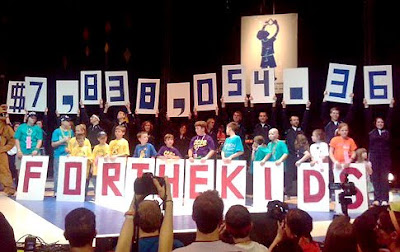
(Photo: NY Daily News)
Instead of relying solely on aggressive phone crusades or door-to-door canvassing and old-fashioned pleas, this charity smartly blends old-fashioned "Please?" with snail mail and social media.
The Penn State IFC/Panhellenic Dance Marathon, widely and affectionately known as THON, got its start in 1973. That year, students still went to Rec Hall to register for classes, a gallon of gas was less than 50 cents, and a tweet was the sound a bird made.
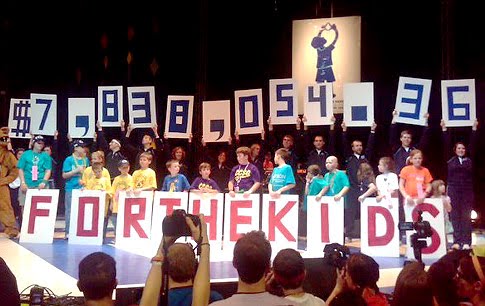
The largest student-run philanthropy in the world aims to raise funds and awareness for pediatric cancer by partnering with The Four Diamonds Fund—and dancing for 46 hours straight. A long way from 78 dancers and $2,000 in 1973: 2010 saw 700 dancers and nearly $8 million. THON has raised more than $69 million total to help offset treatment costs not covered by insurance.
THON uses traditional outreach methods like e-mail forms and letters (this author received snail mail from her younger sister, a senior at Penn State and on the Rules & Regs. committee). What helps THON get recognized locally is canning, which is exactly what it sounds like: Groups of students head to someone's hometown, generally in the mid-Atlantic, and collect donations in coffee cans. What has helped THON get recognized on a more national scale is its online presence.
YouTube features highlights, like the football team's song and dance, unveiling of the logo or amount of funds raised, a year's line dance, and more. Victorious stories, donation reminders, and well-wishes from former dancers and the community comprise THON's Facebook page. THON's Tumblr includes posts on looks at the folks behind the scenes and transcripts of speeches given by those affected by childhood cancer.
And there are your friendly celeb shout-outs. A perhaps unsuspected proponent last year was Khloe Kardashian, who made it her own mission last winter to tell readers of her blog and followers of her Twitter about THON and to encourage the dancers during the marathon.
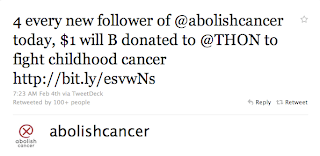
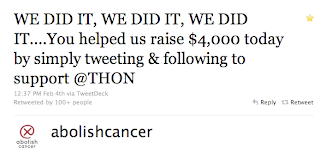
THON's Twitter account tells quite a tale, too. Unlike some campaigns that are only big seasonally, THON is a year-round project and commitment. In addition to how easy it is to click "Retweet" to share a message, fundraising is "for the birds"—the Twitter kind. Abolish Cancer pledged to donate a dollar to THON for each new follower on Feb. 4 of its Twitter account. The response was huge: $4,000 for THON, simply because of a click of a button on one day.
Kids these days—and their highly effective social-media campaigns for philanthropy.
Instead of relying solely on aggressive phone crusades or door-to-door canvassing and old-fashioned pleas, this charity smartly blends old-fashioned "Please?" with snail mail and social media.
The Penn State IFC/Panhellenic Dance Marathon, widely and affectionately known as THON, got its start in 1973. That year, students still went to Rec Hall to register for classes, a gallon of gas was less than 50 cents, and a tweet was the sound a bird made.
The largest student-run philanthropy in the world aims to raise funds and awareness for pediatric cancer by partnering with The Four Diamonds Fund—and dancing for 46 hours straight. A long way from 78 dancers and $2,000 in 1973: 2010 saw 700 dancers and nearly $8 million. THON has raised more than $69 million total to help offset treatment costs not covered by insurance.
THON uses traditional outreach methods like e-mail forms and letters (this author received snail mail from her younger sister, a senior at Penn State and on the Rules & Regs. committee). What helps THON get recognized locally is canning, which is exactly what it sounds like: Groups of students head to someone's hometown, generally in the mid-Atlantic, and collect donations in coffee cans. What has helped THON get recognized on a more national scale is its online presence.
YouTube features highlights, like the football team's song and dance, unveiling of the logo or amount of funds raised, a year's line dance, and more. Victorious stories, donation reminders, and well-wishes from former dancers and the community comprise THON's Facebook page. THON's Tumblr includes posts on looks at the folks behind the scenes and transcripts of speeches given by those affected by childhood cancer.
And there are your friendly celeb shout-outs. A perhaps unsuspected proponent last year was Khloe Kardashian, who made it her own mission last winter to tell readers of her blog and followers of her Twitter about THON and to encourage the dancers during the marathon.
THON's Twitter account tells quite a tale, too. Unlike some campaigns that are only big seasonally, THON is a year-round project and commitment. In addition to how easy it is to click "Retweet" to share a message, fundraising is "for the birds"—the Twitter kind. Abolish Cancer pledged to donate a dollar to THON for each new follower on Feb. 4 of its Twitter account. The response was huge: $4,000 for THON, simply because of a click of a button on one day.
Kids these days—and their highly effective social-media campaigns for philanthropy.


Friday, February 4, 2011
Lions and Tigers and... Social Media
By Monica J. Witzig
Big Cat Rescue, of Tampa, Florida, specializes in educating others about and caring for exotic cats—and leads the way in social-media outreach among nonprofit organizations.
Big Cat Rescue, of Tampa, Florida, specializes in educating others about and caring for exotic cats—and leads the way in social-media outreach among nonprofit organizations.
Big Cat Rescue, like many organizations—nonprofit or otherwise, has an online presence that includes its website, a blog, Twitter, Facebook, and YouTube, among other outlets. According to an interview with BCR's CEO, Carol Baskin, the organization ranks No. 6 as the most-viewed and No. 7 as the most-subscribed-to nonprofit on YouTube. In fact, BCR takes social-media influence so seriously that it employs two full-time aficionados, who are responsible for videos, e-cards, chat forums, tweets, etc.
So, does the outreach work? Says Baskin: "We also have quite a bit of anecdotal evidence that our online efforts are paying off because when people mail in a check they will often say something like, 'I loved your YouTube video of the cats playing with pumpkins,' or 'I found you on Facebook.'"
Of the 325 social media sites to which BCR regularly posts, Ms. Baskin cites Posterous and TrafficGeyser as most effective.
Not content to rest on its social-media laurels, Big Cat Rescue has embarked on an overhaul of its website and is delving into text-to-give campaigns and its second iTunes application.
This kind of outreach doesn’t “just happen.” Entrepreneurial nonprofits are taking the risk to devote their precious resources to social media. Which do you check more: the editorials in a printed newspaper—or your Twitter feed?

Sunday, January 2, 2011
Facebook Overtakes Google
Many marketers are abuzz about the article in the Washington Post that reports that for the first time, Facebook pushes past Google as the most popular site on the Internet. Does this signal the preeminence of social networking? Reflect a vulnerable side of Google? Demonstrate dominance by Facebook?
Hmmm…it wasn’t that long ago that MySpace was far more popular than Facebook. In fact, it wasn’t until this year that Facebook outstripped MySpace in terms of users within the United States.
Regardless, the headline does indicate a number of important trends…social networking has arrived and now is ingrained in the American psyche. Email no longer holds sway, despite the older generation's extensive use of this medium…even social networking relies on search functions, so Google isn’t going anywhere…users tend to use Google for short, tactical bursts, while they spend quality time of social sites such as Facebook.
Nonprofit and Government organizations need to submit to the interactive nature of social networking and embrace the change – it’s here to stay. While websites still have a role to play in organizational communication, the broader spectrum of social networking cannot be ignored by organizations, big or small.
Check out the article for yourself: Facebook passes Google as most popular site on the Internet, two measures show
Hmmm…it wasn’t that long ago that MySpace was far more popular than Facebook. In fact, it wasn’t until this year that Facebook outstripped MySpace in terms of users within the United States.
Regardless, the headline does indicate a number of important trends…social networking has arrived and now is ingrained in the American psyche. Email no longer holds sway, despite the older generation's extensive use of this medium…even social networking relies on search functions, so Google isn’t going anywhere…users tend to use Google for short, tactical bursts, while they spend quality time of social sites such as Facebook.
Nonprofit and Government organizations need to submit to the interactive nature of social networking and embrace the change – it’s here to stay. While websites still have a role to play in organizational communication, the broader spectrum of social networking cannot be ignored by organizations, big or small.
Check out the article for yourself: Facebook passes Google as most popular site on the Internet, two measures show
Monday, August 23, 2010
US Nonprofits -- Showing Industry How It’s Done with Social Media
Yes…you read that correctly…the nonprofit sector is sprinting past industry and universities as the leading adopters of social media.
According to a University of Massachusetts Dartmouth Center for Marketing Research study, nonprofit organizations are embracing all types of social media – to include video blogging, social networking, blogging, podcasting, message boards, wikis – and view them as important to the organization’s future.
Indeed, by 2009, 97 percent of the nonprofits surveyed were using social media, up from 75 percent in 2007.
While use of social networking is number one (at 96 percent usage), Twitter comes in second with 90 percent of surveyed nonprofits putting this tool to use. Surveyed corporations prefer Facebook and LinkedIn, while universities’ top choices include Facebook and Twitter.
Of those surveyed, 42 percent of nonprofits view social media as very important to their fundraising strategies. So, while we may talk about the need for nonprofits to adopt marketing best practices from the private sector, it would appear that they could write the book on using social media.
Check out the study for yourself at: http://www1.umassd.edu/cmr/studiesresearch/charitystudy.cfm.
According to a University of Massachusetts Dartmouth Center for Marketing Research study, nonprofit organizations are embracing all types of social media – to include video blogging, social networking, blogging, podcasting, message boards, wikis – and view them as important to the organization’s future.
Indeed, by 2009, 97 percent of the nonprofits surveyed were using social media, up from 75 percent in 2007.
While use of social networking is number one (at 96 percent usage), Twitter comes in second with 90 percent of surveyed nonprofits putting this tool to use. Surveyed corporations prefer Facebook and LinkedIn, while universities’ top choices include Facebook and Twitter.
Of those surveyed, 42 percent of nonprofits view social media as very important to their fundraising strategies. So, while we may talk about the need for nonprofits to adopt marketing best practices from the private sector, it would appear that they could write the book on using social media.
Check out the study for yourself at: http://www1.umassd.edu/cmr/studiesresearch/charitystudy.cfm.
Friday, July 2, 2010
Social Marketing…or, did you mean Social Media Marketing?
Ideen has observed people, to include our clients at times, using these terms interchangeably. We’ve even seen marketing professors get confused. So, are they the same?
In a word, no.
Social marketing refers to the application of marketing techniques to influence the public’s behavior toward a greater social good. Albeit targeted at academia, the Social Marketing wiki (http://socialmarketing.wetpaint.com/) is an interesting source for definitions, case studies, and other information.
Social media , on the other hand, is all about interaction, being highly accessible, and sharing. Most readers, even our grandparents, have heard of social media tools such as Twitter, LinkedIn, and the ubiquitous FaceBook. A commonly used graphic depicting the social media landscape can be found at http://www.fredcavazza.net/files/Q2-08/SocialMediaLandscape.jpg. You can search www.Slideshare.net to find an abundance of PowerPoint files that explain social media in very visual terms. Companies are scrambling to leverage the social media tools for marketing purposes -- some are succeeding, while others are stumbling.
Can you mix the two? Absolutely. Mashable Media is one interesting online source for trends in social media marketing and the intersection with social marketing. Here’s a link to an interesting article on how social media could change the Federal Government. Really…we’re not kidding…actually changing government… http://mashable.com/2010/05/19/government-agencies-social-media/. Nonprofits are seizing the opportunity as a cost-effective way of targeting and reaching donors. (Think "Haiti earthquake" and everyone texting a $10.00 contribution.)
Ideen will be featuring a series of blogs on social marketing and social media in the coming months, so check back.
In a word, no.
Social marketing refers to the application of marketing techniques to influence the public’s behavior toward a greater social good. Albeit targeted at academia, the Social Marketing wiki (http://socialmarketing.wetpaint.com/) is an interesting source for definitions, case studies, and other information.
Social media , on the other hand, is all about interaction, being highly accessible, and sharing. Most readers, even our grandparents, have heard of social media tools such as Twitter, LinkedIn, and the ubiquitous FaceBook. A commonly used graphic depicting the social media landscape can be found at http://www.fredcavazza.net/files/Q2-08/SocialMediaLandscape.jpg. You can search www.Slideshare.net to find an abundance of PowerPoint files that explain social media in very visual terms. Companies are scrambling to leverage the social media tools for marketing purposes -- some are succeeding, while others are stumbling.

Can you mix the two? Absolutely. Mashable Media is one interesting online source for trends in social media marketing and the intersection with social marketing. Here’s a link to an interesting article on how social media could change the Federal Government. Really…we’re not kidding…actually changing government… http://mashable.com/2010/05/19/government-agencies-social-media/. Nonprofits are seizing the opportunity as a cost-effective way of targeting and reaching donors. (Think "Haiti earthquake" and everyone texting a $10.00 contribution.)
Ideen will be featuring a series of blogs on social marketing and social media in the coming months, so check back.
Monday, April 26, 2010
Who do you trust? Small Business!
A colleague of mine recently sent me a link to a USA Today article that reports that the American public trusts small businesses more than any other type of organization --http://http://www.usatoday.com/money/smallbusiness/columnist/abrams/2010-04-23-small-business-pew-survey_N.htm.
According to the Pew Research Center, small businesses garnered more trust than churches, universities, and technology companies in a study recently released by the Center.
Yes, this is the same study that reported how little the American public trusted the federal government and Congress, as well as banks and financial institutions. And it was this lack of trust in government that received most of the attention in the media. Where was the story about small businesses?
Because small businesses are splintered, they do not have a voice in Washington like larger corporations do. They lack a political base, have little influence "inside the beltway," and cannot muster a war chest to push their agenda.
What most people do not realize, however, is that small businesses continue to be the economic engine behind the US recovery, generating about 65% of all new jobs.
Ideen salutes small businesses -- we support your inventiveness, your risk-taking, and your ability to dream big. Check out the article and tell someone about it. And, next time you need something, skip the trip to the big box store and support your local small business.
According to the Pew Research Center, small businesses garnered more trust than churches, universities, and technology companies in a study recently released by the Center.
Yes, this is the same study that reported how little the American public trusted the federal government and Congress, as well as banks and financial institutions. And it was this lack of trust in government that received most of the attention in the media. Where was the story about small businesses?
Because small businesses are splintered, they do not have a voice in Washington like larger corporations do. They lack a political base, have little influence "inside the beltway," and cannot muster a war chest to push their agenda.
What most people do not realize, however, is that small businesses continue to be the economic engine behind the US recovery, generating about 65% of all new jobs.
Ideen salutes small businesses -- we support your inventiveness, your risk-taking, and your ability to dream big. Check out the article and tell someone about it. And, next time you need something, skip the trip to the big box store and support your local small business.
Wednesday, March 10, 2010
Touch Points -- They Matter!
I recently completed the sale of a home, and although it all went smoothly, one element stood out among the rest -- the performance of my moving company. This blog is not an advertisement for the company, but rather, an examination of key marketing elements called "touch points."
While most consumers share horror stories about their movers, I have nothing but praise for the company I hired. What made the difference? Every "touch point" I came in contact with provided a positive experience.
Let's break it down...
It started when my home was listed for sale. A company representative called me and offered to provide a free estimate. OK -- no big surprise here. When I told the representative that I was not that far along in the process, she asked for my permission to check in monthly with me. Check! Permission marketing.
Six months later when I had a contract on my home, the representative helped me set up an appointment for an estimate. The appointment, however, was scheduled during our once-in-a-century back-to-back blizzards and understandably, the sales person could not make it to my home through three-foot snow drifts. He rescheduled the appointment at a time that was convenient for me during a weekend. Check! Putting the customer first.
When the packing crew showed up the day before the move, the crew members were prompt, polite, and very neat. They gained my trust. The next day, when they actually moved my household, they arrived early, swiftly loaded the truck, and delivered the goods to my new home in record time. Check! Service exceeded expectations.
I ran into one glitch when I moved into my new home. I had planned to put some items in a storage unit, and discovered that I would need to use some of the packing materials from the crew, such as blankets and padding. The crew chief immediately called his supervisor and arranged for permission. Check! Immediate decisions at crucial moments.
Everyone in this company -- from the initial phone marketer to the crew that did the heavy lifting -- provided outstanding service. Each "touch point" that I encountered was positive, helpful, and professional. The results? When realtors, friends, and colleagues ask me, I will sing this company's praises. The power of word-of-mouth is mighty, and this company clearly "gets it."
While most consumers share horror stories about their movers, I have nothing but praise for the company I hired. What made the difference? Every "touch point" I came in contact with provided a positive experience.
Let's break it down...
It started when my home was listed for sale. A company representative called me and offered to provide a free estimate. OK -- no big surprise here. When I told the representative that I was not that far along in the process, she asked for my permission to check in monthly with me. Check! Permission marketing.
Six months later when I had a contract on my home, the representative helped me set up an appointment for an estimate. The appointment, however, was scheduled during our once-in-a-century back-to-back blizzards and understandably, the sales person could not make it to my home through three-foot snow drifts. He rescheduled the appointment at a time that was convenient for me during a weekend. Check! Putting the customer first.
When the packing crew showed up the day before the move, the crew members were prompt, polite, and very neat. They gained my trust. The next day, when they actually moved my household, they arrived early, swiftly loaded the truck, and delivered the goods to my new home in record time. Check! Service exceeded expectations.
I ran into one glitch when I moved into my new home. I had planned to put some items in a storage unit, and discovered that I would need to use some of the packing materials from the crew, such as blankets and padding. The crew chief immediately called his supervisor and arranged for permission. Check! Immediate decisions at crucial moments.
Everyone in this company -- from the initial phone marketer to the crew that did the heavy lifting -- provided outstanding service. Each "touch point" that I encountered was positive, helpful, and professional. The results? When realtors, friends, and colleagues ask me, I will sing this company's praises. The power of word-of-mouth is mighty, and this company clearly "gets it."
Tuesday, February 9, 2010
Guest Blog on Mom & Pop Shops -- The Next Generation
All -
Ideen is pleased to post a guest blog by Vicki Tinnel, one of our associates. Hope you enjoy it!
With the fall of Lehman Brothers in November 2008, an unsuspecting American public watched as the markets took one of the quickest downturns towards recession in decades. Companies froze, organizations folded, pensions all but disappeared, and industry after industry scaled down to skeletal capabilities -- basic operational functions. What that translated into for the US workforce was an unprecedented spike in unemployment. Suddenly, the market was flooded with qualified, experienced people of trade and education, with no 8am-5pm office to call home. However, in accordance with American resiliency, an astounding number of these brave, former W-2 wage earners turned to their own resourcefulness and skill sets. Rather than wait for someone else's company to provide their income, insurance, & retirement, these people chose to create their own businesses. The government took notice, not only sustaining all the existing tax benefits in place for launching an independent operation, but also by signing into law the American Recovery & Reinvestment Act of 2009, under the watchful eye of the US Small Business Administration. This allowed these "accidental entrepreneurs" to receive tools to start, grow, & succeed through resources such as grants, loans, waived interest and fees on credit services, expanded educational opportunities, and more.
Today, there now are more home- and Internet-based businesses than ever before, all competing against each other and larger corporations. Innovation and ingenuity are on the move, and the face of the American economy is evolving yet again.
So...what does it take to succeed in this new generation of business? Several things have to be synchronized: branding, efficiency, and the type of personalization that will convert satisfied customers into loyal customers.
There are several myths involved with branding, and they are about as authoritative as most myths. Entrepreneur sites several: "good branding is too expensive," "word-of-mouth is what you really need to be successful," "I don't know how to do the social networking thing," and probably most common, "my products & services are so great, they're all I need to build my business."
The problem with these ideas is that they assume the buyer is open-minded and by virtue, eager to find you. The truth is, however, according to Consumer Reports, the average American is exposed to over 274 advertisements daily. That's over 45 messages from other businesses before breakfast!
We've all seen it before...companies with inferior products or services get the attention and get the sales, simply because they are recognizable. Also, considering that "fear of the unknown" is one of the greatest drivers of human behavior, that boils down to, for better or worse, people go with what they know. Period. Word-of-mouth truly is invaluable to expanding a customer base, and a strong brand is well worth the price.
Additionally, in order to thrive in the current arena as a small business, implementing efficiency and personalization at the highest level is an absolute essential. "One size fits all" is obsolete. Even if the product offerings are standardized, every client needs to feel as if their package was tailor made to fit their needs and provides solutions for their unique issues. On top of this, the general public's patience for service delivery is becoming more and more rare. They want it their way, they want if yesterday, and they want the whole experience to surpass their expectations. Delivering at this level is what makes or breaks a reputation and solidifies a brand image.
Although there is undeniably high first-year failure rate for new small businesses, using these techniques and sprinkling a healthy dose of ingenuity, perseverance, relationship building, and sound business practices can spell success for the entrepreneur. But with the Great Recession upon us, is this really the time to put all these pieces together and launch? Consider Chic-Fil-A, which started as a local family-owned restaurant in a small suburb of Georgia in the year after WWII ended. The origins of Apple began in the garage of a penniless college dropout. And in 1971, Starbucks was nothing more than a corner coffee house owned by two teachers and a writer that didn't even serve lattes or cappuccinos. Fearless Americans have proven time and time again that not only can you survive, you can grow and thrive during hard times. And create an enduring, successful brand.
Ideen is pleased to post a guest blog by Vicki Tinnel, one of our associates. Hope you enjoy it!
Mom & Pop Shops: The Next Generation
With the fall of Lehman Brothers in November 2008, an unsuspecting American public watched as the markets took one of the quickest downturns towards recession in decades. Companies froze, organizations folded, pensions all but disappeared, and industry after industry scaled down to skeletal capabilities -- basic operational functions. What that translated into for the US workforce was an unprecedented spike in unemployment. Suddenly, the market was flooded with qualified, experienced people of trade and education, with no 8am-5pm office to call home. However, in accordance with American resiliency, an astounding number of these brave, former W-2 wage earners turned to their own resourcefulness and skill sets. Rather than wait for someone else's company to provide their income, insurance, & retirement, these people chose to create their own businesses. The government took notice, not only sustaining all the existing tax benefits in place for launching an independent operation, but also by signing into law the American Recovery & Reinvestment Act of 2009, under the watchful eye of the US Small Business Administration. This allowed these "accidental entrepreneurs" to receive tools to start, grow, & succeed through resources such as grants, loans, waived interest and fees on credit services, expanded educational opportunities, and more.
Today, there now are more home- and Internet-based businesses than ever before, all competing against each other and larger corporations. Innovation and ingenuity are on the move, and the face of the American economy is evolving yet again.
So...what does it take to succeed in this new generation of business? Several things have to be synchronized: branding, efficiency, and the type of personalization that will convert satisfied customers into loyal customers.
There are several myths involved with branding, and they are about as authoritative as most myths. Entrepreneur sites several: "good branding is too expensive," "word-of-mouth is what you really need to be successful," "I don't know how to do the social networking thing," and probably most common, "my products & services are so great, they're all I need to build my business."
The problem with these ideas is that they assume the buyer is open-minded and by virtue, eager to find you. The truth is, however, according to Consumer Reports, the average American is exposed to over 274 advertisements daily. That's over 45 messages from other businesses before breakfast!
We've all seen it before...companies with inferior products or services get the attention and get the sales, simply because they are recognizable. Also, considering that "fear of the unknown" is one of the greatest drivers of human behavior, that boils down to, for better or worse, people go with what they know. Period. Word-of-mouth truly is invaluable to expanding a customer base, and a strong brand is well worth the price.
Additionally, in order to thrive in the current arena as a small business, implementing efficiency and personalization at the highest level is an absolute essential. "One size fits all" is obsolete. Even if the product offerings are standardized, every client needs to feel as if their package was tailor made to fit their needs and provides solutions for their unique issues. On top of this, the general public's patience for service delivery is becoming more and more rare. They want it their way, they want if yesterday, and they want the whole experience to surpass their expectations. Delivering at this level is what makes or breaks a reputation and solidifies a brand image.
Although there is undeniably high first-year failure rate for new small businesses, using these techniques and sprinkling a healthy dose of ingenuity, perseverance, relationship building, and sound business practices can spell success for the entrepreneur. But with the Great Recession upon us, is this really the time to put all these pieces together and launch? Consider Chic-Fil-A, which started as a local family-owned restaurant in a small suburb of Georgia in the year after WWII ended. The origins of Apple began in the garage of a penniless college dropout. And in 1971, Starbucks was nothing more than a corner coffee house owned by two teachers and a writer that didn't even serve lattes or cappuccinos. Fearless Americans have proven time and time again that not only can you survive, you can grow and thrive during hard times. And create an enduring, successful brand.
Subscribe to:
Posts (Atom)